Why Learning PLCs Is Still One of the Smartest Career Moves in Tech
Programmable logic controllers (PLCs) act as the brain behind machinery and automated processes in factories. While there have been rapid advances in industrial settings, particularly in the areas of AI and robotics, PLC technician and programming skills remain essential in these environments. If you're a student who is seeking a career in automation technology and industrial automation, learning programmable logic controllers can open doors to PLC career opportunities.
How Automation Is Growing In Canadian Manufacturing
Data Bridge Market Research reports Canada's industrial automation market will grow from 6.09 billion USD in 2024 to 10.47 billion USD in 2032. There are many reasons for this growth, including reduced labor costs, improved efficiency, and sustainability. Today, machines in factories complete tasks that are dangerous, tedious, or require special precision. Humans must complete more complex tasks, such as programming machines.
How PLCs Are Used
Programmable logic controllers play a role in several key sectors in Canada, including manufacturing, energy, utilities, petrochemicals, mining, natural resources, oil and gas, paper, pharmaceuticals, water, and wastewater treatment.
PLC technicians in these industries must program the machines, troubleshoot problems, and update machine hardware. They also monitor sensors and make decisions based on readings to enable modern automated factories to produce and function as intended. To do this, they require specialized knowledge of PLCs, machinery, sensors, and more.
Benefits of PLC Knowledge
There are many benefits to having PLC training. If you're considering a job as a PLC technician, here's what to consider as you move forward with your training and career.
- Useful knowledge in an in-demand field: PLCs operate in industrial environments where today's cars, paper, oil, chemicals, and other essential products are created. When you become a programmable logic controller technician, you can jump straight into modern manufacturing.
- Compatibility: While there have been advances beyond PLCs, many industries continue to adopt programmable logic controller technology for automation. Learning PLC programming gives you access to maintenance and retrofit work that will continue for a long time.
- Bridge to higher skills: PLC skills lay the groundwork for more advanced control systems. Once you understand PLC programming, you may use this knowledge to learn other types of programming, to make yourself an even more essential part of factory automation.
Career Opportunities
There is a growing demand for technicians who can design, program, and maintain PLC systems in Canada. Programmers can make anywhere from 74,000 CAD to 114,000 CAD in major Canadian cities, according to PLC Programming.
Career paths for individuals with PLC training are numerous. Entry-level roles may spend time troubleshooting sensors, motors, and wiring, while senior roles include exciting opportunities like leading automation projects, mentoring beginner technicians, and managing teams of engineers.
Examples of careers that benefit from or require PLC training include:
- Controls Technicians troubleshoot and maintain existing systems.
- Facilities Engineers manage and maintain machinery in manufacturing plants. They perform regular inspections, implement safety standards, repair existing systems, and conduct maintenance.
- Controls Engineers spearhead projects by designing and developing automated systems through an extensive process that involves research and analysis. They also evaluate existing systems for areas of weakness and optimize those systems to become more efficient.
People who know PLC programming benefit from a combination of real-world experience and education to advance their roles.
The Value of Learning PLCs Through A Reputable Institution
The best way to become a programmable logic controller technician is through a reputable program that provides a solid foundation for knowledge and hands-on experience. Here are some of the qualities of a good PLC Technician Training program:
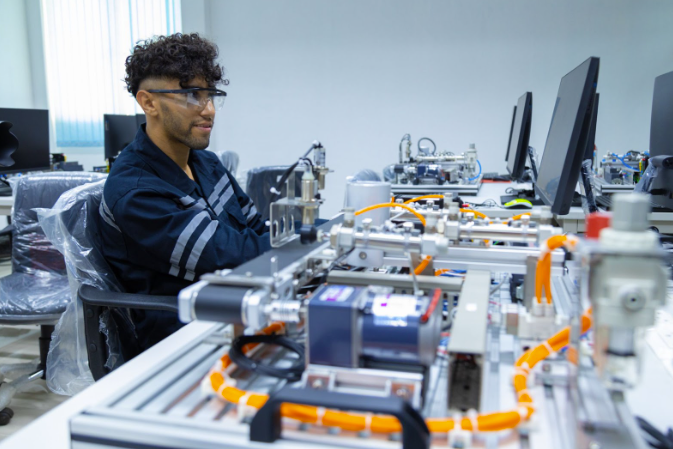
- Hands-on labs: Training in a lab with simulators and real programmable logic controller hardware makes it easy to learn PLC programming.
- Certificate: Getting training from a program that offers a certificate shows that the technician is ready for real-world experience.
- Soft skills: There's more to PLC management than you might think. In structured training programs, students learn problem-solving skills, logical thinking, and more. Developing these soft skills helps students jump into real-world situations with greater ease.
Future‑Proofing with PLCs
PLCs play a critical role in manufacturing infrastructure. While they get less attention than some of the modern advances in robotics and AI, PLCs represent a vital part of industrial automation. You can integrate them with newer technologies, but programmers require core skills that are very specific to their systems.
In addition, PLCs are sustainable. Automated systems can help reduce factory waste by operating with greater precision and fewer errors. The only way to keep these systems running is through technicians who can program the systems that keep factories going.
A Smart Career Move
PLC technician training is a smart investment for anyone who wants to pursue PLC career opportunities. If you'd like to evaluate whether you should switch to a PLC technician course, consider talking to instructors or industry professionals to determine whether this move is right for you.
If you're already sure that automation is the right field for you, look for a PLC Technician Training program that provides you with hands-on experience and a solid introduction to PLC technologies.
Make Your Next Move With George Brown Polytechnic
PLCs are a smart career choice for anyone who wants to be involved in automation technology. There's a real industrial demand for people with PLC training, and this demand will continue into the future. PLCs also provide a bridge into a range of other automation skills. Having a strong foundation in PLC technology can help you start a career that will take you far.
To learn more about how to learn PLC technology, explore the PLC Technician Training program at George Brown Polytechnic. Call us at 1-888-553-5333 to speak to one of our Program Consultants.