Though it may be hard to believe that industrial automation has been around for nearly 70 years, what’s harder still is that technology is continually finding new and innovative ways to improve production capabilities and process efficiencies. Of the very long list of industrial technologies that emerged from what has come to be known as the third industrial revolution, the Programmable Logic Controller (PLC) is arguably one of the most impactful.
In some ways, the phrase, “if it ain’t broke, don’t fix it” is an adage that can be applied to the manufacturing sector, particularly when it comes to the use of Programmable Logic Controllers (or PLCs).
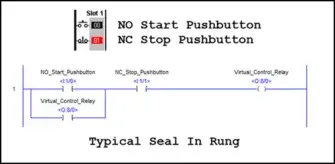
In our last installment of the Practicing PLC Technician Series, we examined some of the common approaches used when programming PLCs for industrial applications. In this installment we will examine some of the most common programming errors and oversights that occur when working with the instructions we have covered to date in our ongoing series. Here are some basic programming oversights and issues to watch out for.
Over these next two installments of our ongoing Practicing PLC Technician Series we will examine some common programming concepts as well as some of the most common programming errors that occur when utilizing the instructions we have covered in basic control applications.
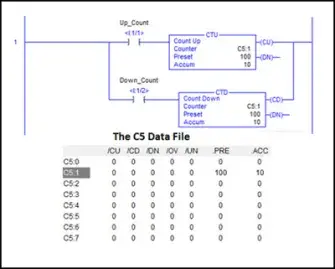
In this installment of our ongoing Practicing PLC Technician Series, we will expand on our knowledge of the virtual counterparts to real world field equipment already familiar to PLC technicians working in industry today. The last physical device we will be examining is the counter.
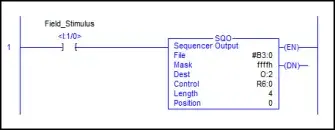
In this installment of the Practicing PLC Technician Series, we continue our investigation into some of the ladder logic instructions that are based on real world field equipment familiar to the technicians of today. We have covered virtual coils and contacts, as well as timer instructions used for time driven program segments. Here we will be taking a look at a simple Event Driven program segment using another staple of relay logic control systems, the drum sequencer. T
In our last installment of the Practicing PLC Technician Series, we began to look at some of the similarities between relay logic control circuits and plc ladder logic programming. Over the next few blogs, we will further examine some additional instructions that are based on real world field equipment or devices that have been included in the ladder logic programming approach available for programming modern PLC’s.