Header Image

News Blogs

Discrete vs. Analog I/O: What's the Difference?

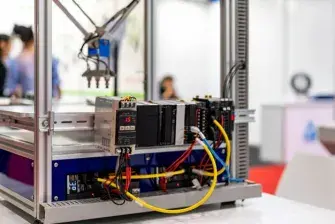
discrete and analog I/O modules

When it comes to learning the foundations of PLC programming, it can be as easy as flicking on and off a switch. That’s the main difference between discrete and analog I/O modules! Discrete signals are simply on or off, whereas analog signals vary. 

SCADA System: What is it and How it Works

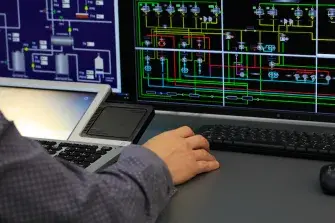
worker using scada system

When we think about technologies which have revolutionized industrial automation, we often think about a specific piece of hardware we interact with, rather than the software behind the scenes. For factories and manufacturing plants, the Programmable Logic Controller (PLC) dramatically improves efficiency and control; yet it’s the SCADA software which runs all the operations smoothly.

The Importance of PLCs in Manufacturing

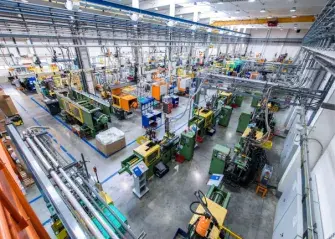
aerial view of factory floor

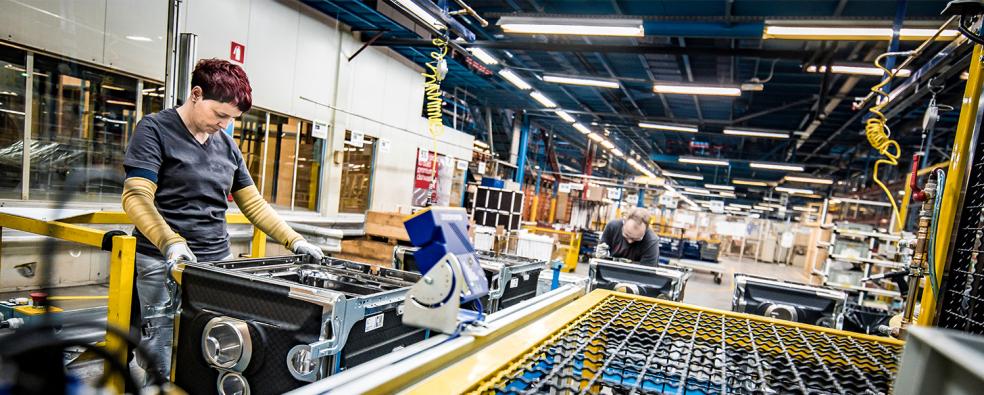
The common definition one would find on Wikipedia describes a PLC or Programmable Logic Controller as the following:  “ A programmable logic controller (PLC) or programmable controller is an industrial computer that has been ruggedized and adapted for the control of manufacturing processes, such as assembly lines, machines, robotic devices, or any activity that requires high reliability, ease of programming, and process fault diagnosis.

The Basics of Ladder Logic

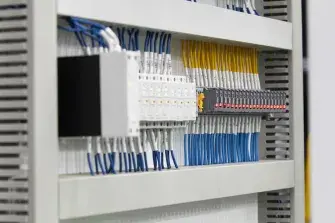
programmable logic controller

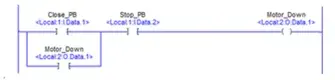
One of the top 5 most popular types of PLC programming languages is ladder logic. But what makes it so popular, and what does it take to master the language? Ladder logic is a programming language and one of the first languages that was ever used for PLCs or programmable logic controllers.

5 Tips on How to Reduce Scan Time Using Ladder Logic - Part 2

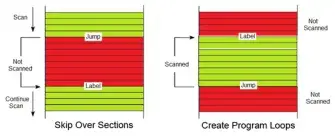
2 common ways of using JMP & LBL

In part 2 on how to reduce scan using Ladder Logic, we will examine the remaining three of our five general tips on how to minimize PLC scan cycle time with ladder logic programming. We will provide examples of each case as we did for the first two tips we discussed in Part 1 of this blog.

5 Tips on How to Reduce Scan Time Using Ladder Logic - Part 1

plc image 1

In the next two blogs, we will discuss scan time and its impact on everyday PLC applications as well as examine how it can be reduced. Scan time is an important metric to be considered in many high-speed PLC applications. The time it takes to perform a single scan cycle can have significant impact on the input stimulus and/or output control signals present or required for high-speed applications. Specialty I/O modules are often employed in these situations and offer significant advantages.

GBC Updates its PLC Technician Certificate Curriculum

Valve 3DWorld

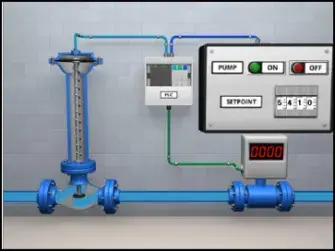
In keeping with GBC’s longstanding tradition of garnering student and industry feedback, we are happy to announce that we have updated our PLC Technician Certificate program curriculum to include new features and content directly in response to industry needs and our students most prevalent requests.

Allen Bradley vs Siemens: What’s the difference between these PLC tools?

blog image thumbnail

Though it may be hard to believe that industrial automation has been around for nearly 70 years, what’s harder still is that technology is continually finding new and innovative ways to improve production capabilities and process efficiencies. Of the very long list of industrial technologies that emerged from what has come to be known as the third industrial revolution, the Programmable Logic Controller (PLC) is arguably one of the most impactful.